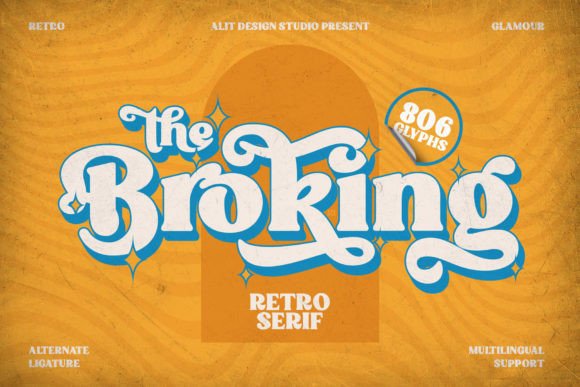
Broking: A Retro Font That Sparks Creative Energy
Broking is a display font that brings the charm of retro design into modern creative projects. Its unique blend of boldness and elegance makes it stand out in a world full of generic typefaces. Whether you're designing for print, digital media, or branding, Broking offers a distinctive look that can elevate your work instantly. The font's PUA encoding ensures smooth access to its extended glyphs and ligatures, making it both user-friendly and powerful.
Why Broking Stands Out
In the realm of typography, choosing the right font can make all the difference. Broking captures attention with its crisp edges and vintage flair, combining elements of mid-century design with a contemporary twist. It’s not just another retro font; it’s one that feels alive and adaptable. The careful crafting behind each letterform allows it to maintain clarity even at smaller sizes, while still being impactful when used as a headline or title.
This font is particularly interesting because it works well across a range of applications—from editorial layouts to packaging design. Its versatility stems from the balance between structure and playfulness, making it suitable for both professional and personal use. The inclusion of stylistic alternates and ligatures gives designers extra room to personalize their projects without compromising legibility or aesthetic appeal.
Graphic Design and Branding
Designers often seek fonts that communicate personality and purpose. Broking is ideal for creating logos, posters, or brand assets that need to feel nostalgic yet fresh. For instance, a vintage-style coffee shop might use Broking on its signage to evoke warmth and authenticity. Similarly, lifestyle brands focusing on retro aesthetics can integrate this font into packaging or marketing materials to reinforce their identity.
- Logos: Use Broking for titles or taglines that reflect a timeless vibe.
- Posters: Ideal for event promotions, especially those centered around music, film, or pop culture from the past.
- Product Packaging: Add character to labels, boxes, or wrappers with a touch of retro cool.
Marketing and Advertising
Marketers looking to create eye-catching campaigns will find Broking a valuable tool. Its retro style can be used to highlight limited-time offers or seasonal themes. When paired with muted color palettes and distressed textures, it can convey a sense of authenticity and nostalgia—qualities that resonate well with consumers seeking emotional connections in their purchases.
- Use Broking for headlines in print ads or social media graphics targeting audiences who appreciate vintage styles.
- Combine it with photography of classic items (e.g., vinyl records, old cars) to enhance visual storytelling.
- Try using it in email subject lines or promotional banners for campaigns with a retro angle.
Bloggers and Content Creators
If you’re a blogger or content creator working on a theme that blends minimalism with a dash of nostalgia, Broking could be your go-to font for headers and pull quotes. It adds visual interest without overwhelming the reader. For example, a travel blog about road trips in the 1960s could feature Broking prominently in its layout to set the tone and mood.
- Headers and Subheaders: Use Broking sparingly for emphasis and to break up text visually.
- Pull Quotes: Highlight key phrases or testimonials with a stylish typeface.
- Social Media Captions: Apply it to Instagram posts, Pinterest boards, or YouTube thumbnails for a vintage edge.
Practical Tips for Using Broking
While Broking is inherently stylish, it’s important to use it effectively to avoid cluttering your design. Here are some grounded strategies for incorporating it into your workflow:
Balance Is Key
Retro fonts can easily dominate a layout if not handled carefully. To keep your designs clean and readable, consider pairing Broking with a more neutral sans-serif or serif font for body text. This contrast helps guide the viewer’s eye and maintains a professional tone where needed.
Color and Texture Pairings
To maximize Broking’s retro appeal, experiment with complementary colors and textures. Think sepia tones, faded blues, or mustard yellows. You can also layer it over grainy backgrounds or add subtle drop shadows to give it depth. These small touches help bring out the font’s character and align it with the overall mood of your project.
Accessibility and Legibility
Though Broking is a display font, always test how it performs in different contexts. Ensure there’s enough contrast against the background and that it remains legible on various screen sizes. If using it for longer text passages, limit its use to short bursts and always pair it with a more accessible base font.
Real-World Inspiration and Ideas
Here are a few real-life examples of how Broking can inspire your next project:
- Book Covers: A self-published author might use Broking for the title of a mystery novel set in the 1970s. The font’s strong presence and retro feel support the story’s atmosphere.
- Festival Posters: Indie music festivals or vintage car shows can leverage Broking to create posters that capture the essence of bygone eras while feeling current.
- Craft Projects: From handmade greeting cards to custom t-shirts, Broking adds a fun, expressive element to DIY creations.
For Educators and Presenters
Teachers and presenters can use Broking creatively in educational materials or slides that aim to engage students through visual storytelling. Imagine a history lesson brought to life with Broking in slide titles or key facts. It’s a subtle way to make learning feel more dynamic and memorable.
Entrepreneurs and Small Business Owners
Small businesses often rely on branding to stand out. Broking can be used in storefront signs, business cards, or website headers to create a unique identity. For example, a boutique selling vintage clothing could use Broking on its logo to instantly communicate its aesthetic. Just remember to keep the rest of the design cohesive so the font doesn’t clash with other elements.
How to Stay Organized While Using Broking
When integrating Broking into a larger design system, consistency is crucial. Define clear usage guidelines to ensure it supports—not distracts from—your message. Here’s how to stay organized:
- Set Rules: Decide which parts of your design will use Broking (e.g., only headlines or specific sections).
- Limit Styles: Stick to one or two weights or variations unless you have a compelling reason to expand.
- Use Layers Sparingly: Avoid adding too many effects like outlines, gradients, or filters that might muddy the font’s clarity.
By treating Broking as a strategic asset rather than just a decorative choice, you’ll create stronger, more intentional designs. Keep your library of fonts well-documented so you can quickly recall when and how to apply Broking most effectively.
Final Thoughts on Typographic Creativity
Typography isn’t just about letters—it’s about emotion, tone, and connection. Broking offers a bridge between the past and the present, helping creators express ideas in a way that feels familiar yet fresh. Whether you’re designing for clients or your own passion projects, this font can spark new directions and open up creative possibilities.
Remember, the best designs come from thoughtful application. Take time to understand your audience and the message you want to send. Then let Broking do what it does best: bring a little bit of cool and fun into your work. With the right approach, it can become one of your favorite tools in the font library.